
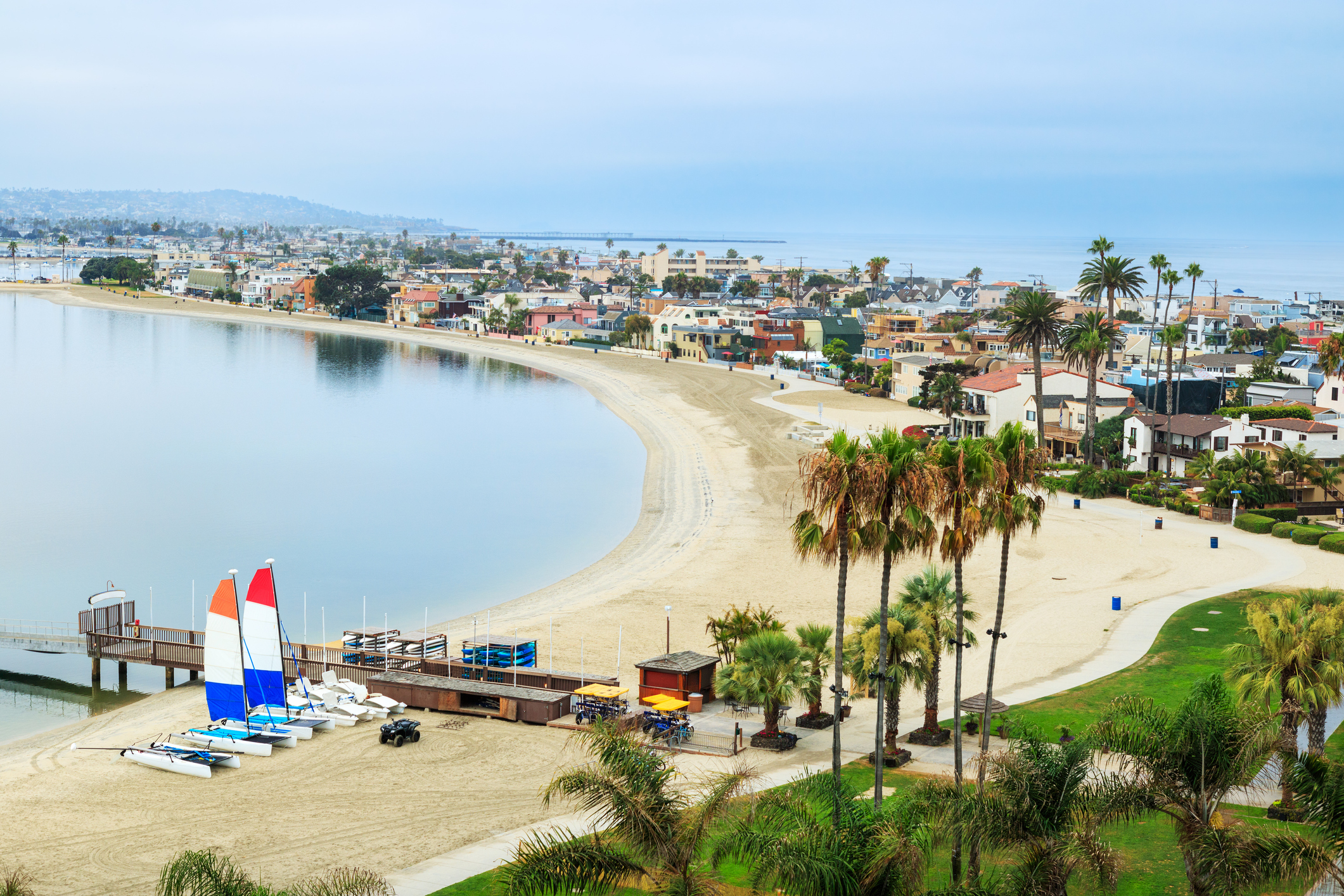
Mission Bay Park in San Diego is widely recognized as the largest man-made aquatic recreational park in the United States. Across its 4,235 acres, coastal recreation, public access, infrastructure, wetlands, shorelines, and upland habitat coexist as one interconnected system. The Mission Bay Park Improvements Program seeks to improve that system through wetland and habitat restoration, shoreline restoration, water quality enhancements, accessibility improvements, and infrastructure renewal. Within the interconnected system, one improvement can affect opportunities and conditions elsewhere. For Dudek and the City of San Diego, the challenge was not simply evaluating individual projects, but understanding how restoration, shoreline resilience, infrastructure, and public use could work together across Mission Bay and Mission Beach.
Dudek Principal and Coastal Services Manager Matt Valerio said, “What made this Program particularly complex was its geographic reach and the range of improvements being considered, all within an incomparable coastal wetland and recreational resource.”
Looking at improvements together can reveal connections, tradeoffs, and unintended consequences that may be missed when projects are considered individually. At Mission Bay, integrated environmental review provided a broader perspective, advancing habitat restoration and coastal resilience while considering how individual decisions could affect water quality, public access, recreation, infrastructure, and commercial interests across the park.
Seeing Mission Bay as One Interconnected System
Rather than approaching habitat restoration, shoreline resilience, water quality, infrastructure, recreation, and access as separate efforts, the Mission Bay Park Improvements Program considers how they interact across the park. Dudek supported that effort by bringing environmental planning together with coastal, restoration, design, and engineering expertise, allowing environmental considerations and implementation realities to inform one another.
The Mission Bay Park Improvements Program Environmental Impact Report (EIR) provides the environmental framework for that approach, evaluating preliminary designs for individual improvements alongside broader, bay-wide initiatives. This allows localized effects to be understood within the context of the Program as a whole.
“Using an interconnected approach makes it possible to recognize the Program’s overall benefits while still disclosing impacts tied to specific locations and phases of implementation,” said Valerio.
That information gives decision-makers greater context for weighing impacts, benefits, and tradeoffs as individual improvements move toward implementation.
“Projects considered in isolation are less likely to reveal unintended consequences.”
Matt Valerio, Dudek Principal and Coastal Services Manager
Making Room for Habitat and People
Habitat restoration is central to the Program’s long-term vision for Mission Bay, but restoration decisions cannot be separated from how people use the park or how its shoreline functions. The Program includes improvements focused on:
- Wetland expansion and associated water quality benefits
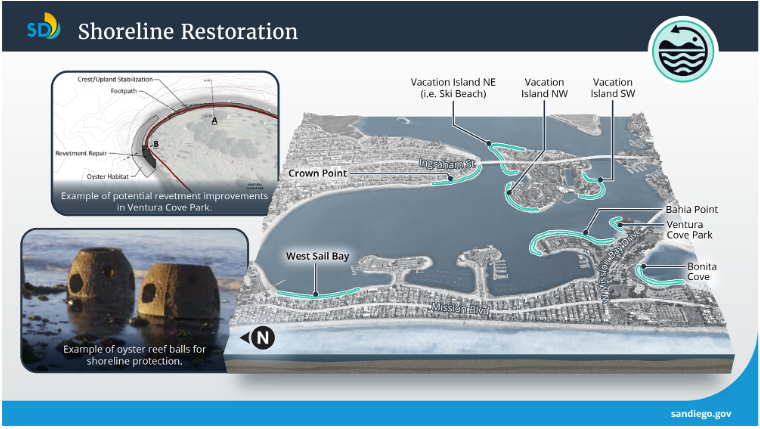
- Shoreline resilience to re-establish eroded shoreline and public beaches
- Upland habitat restoration
- Bicycle and pedestrian access
- Infrastructure renewal along portions of the Mission Beach seawall
- Park-wide signage
For Dudek’s restoration team, that meant considering habitat improvements in relation to water quality, shoreline resilience, public access, recreation, and the practical realities of implementation. Wetland and upland restoration were therefore considered not as stand-alone projects, but as parts of the larger Mission Bay system.
“Ecological restoration within Mission Bay Park involves turning back the clock to pre-park conditions when the site supported a coastal estuary at the terminus of the San Diego River,” said Principal Restoration Ecologist Michael Sweesy. “Balancing and integrating ecological restoration sites into the broader fabric of public recreational uses was challenging. Our focus turned to locations where local streams empty into the bay to maximize water quality benefits, wildlife habitat creation, and easily accessible public enjoyment.”
The environmental review process established a framework for understanding how these goals intersect, including where an improvement may create a localized impact while contributing to a broader bay-wide benefit. At Mission Bay, wetland restoration illustrates why those connections matter. Restoration may shift access or create localized effects in one area while generating broader ecological benefits across the bay. Considering improvements together allows those effects to be viewed alongside opportunities to improve access elsewhere and the real benefits of expanded wetlands, improved tidal flushing, and reductions in slow or stagnant water.
Resilience also influenced how habitat restoration was conceived. Rather than designing solely for current conditions, the team considered strategies such as dunes, oyster reefs, and space for different wetland types to migrate over time in response to climate change. Those strategies connect habitat function with shoreline resilience and water quality while recognizing the recreational and public-access functions of a working public park.
Connecting Restoration to Real-World Design
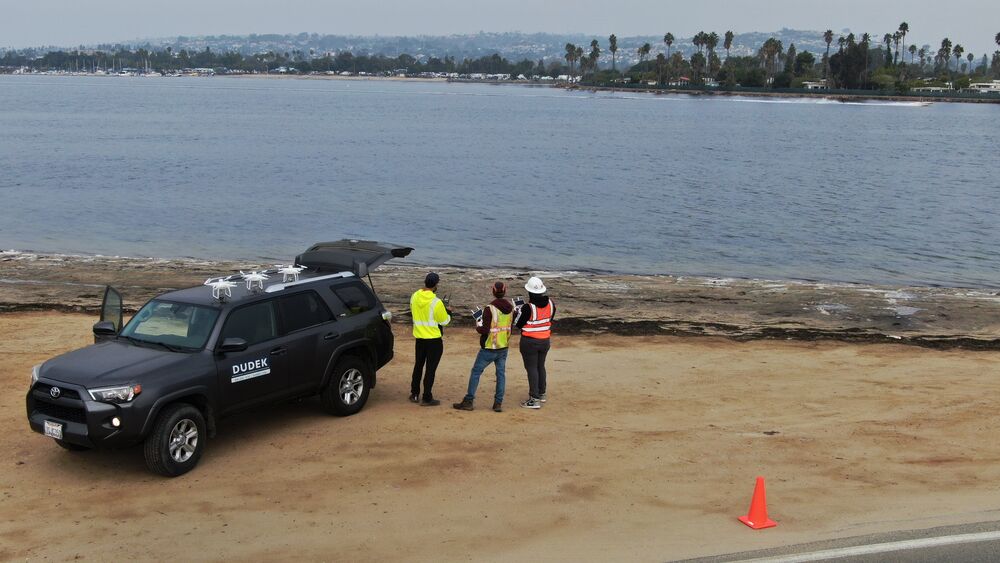
Turning restoration and resilience goals into improvements that can be implemented requires environmental planning, analysis, and design to inform one another. Dudek’s restoration and environmental specialists worked alongside coastal experts, designers, and engineers, with specialized engineering expertise incorporated across the broader project team. This helped consider ecological objectives alongside feasibility, construction realities, and implementation sequence rather than addressing those questions only after environmental review.
The Program combines broader environmental analysis with preliminary engineering information for each individual improvement, including designs developed to approximately 30%. The supporting Implementation Framework and Preliminary Engineering Reports help connect those individual concepts with future implementation procedures.
Bringing design and environmental analysis together also helped move the conversation from “Is this concept environmentally beneficial?” to “How could it actually be implemented, and what would implementation affect?” At roughly 30% design, the team could consider practical questions such as earthwork volume, movement, storage, equipment access, and disturbance limits during restoration and resilience concept development.
“Having that additional level of design detail gave us greater confidence that the improvements were feasible” said Valerio.
The feedback loop between restoration, design, and environmental analysis gave the team greater insight into both the potential benefits of an improvement and what would be required to implement it. It also allowed ecological restoration considerations to influence designs early enough to make a difference.
Giving Future Decisions a Stronger Starting Point
The value of looking across Mission Bay as an interconnected system continues after environmental review is complete. As individual improvements move forward, decision-makers have a common foundation for understanding how each project fits within the Program’s broader habitat, resilience, water quality, infrastructure, recreation, and access goals.
For communities, that broader context can help decision-makers assess:
- What should advance first
- Which improvements could be coordinated
- Where conflicts may emerge
- How a near-term decision could affect future opportunities
Projects identified in, or consistent with, the Program can also be evaluated against the programmatic EIR’s existing scope rather than automatically beginning environmental review from scratch. The Program’s Implementation Framework outlines future procedures and next steps to help support the decision process.
That foundation becomes particularly useful because long-term restoration programs rarely unfold exactly as envisioned at the outset. Projects may advance at different times, funding and priorities can shift, designs can evolve, and environmental conditions can change. Looking across the Program gives future teams a stronger starting point for responding to those changes while keeping individual decisions connected to the larger vision for Mission Bay.
A Broader Lesson for Coastal Communities
Mission Bay illustrates a broader lesson for communities working to restore habitat and strengthen coastal resilience: individual projects are part of larger natural and public systems, even when they are designed, funded, or implemented separately. “The coast and the influence of a changing climate are complex,” said Valerio. “Projects considered in isolation are less likely to reveal unintended consequences.”
Looking across a program can bring those connections into view early enough to do something about them. For Mission Bay, integrated environmental review provided a way to connect habitat restoration, coastal resilience, water quality, infrastructure, recreation, and public access while there was still an opportunity for those considerations to shape future decisions.
Planning a habitat restoration or coastal resilience program? Talk with Dudek about bringing the right disciplines together early.
About the Experts
Matt Valerio is a Principal Planner and leads Dudek’s Coastal Services team. He brings 26 years of experience in complex planning and environmental initiatives, including Port Master Plan amendments, restoration programs, Climate Action Plans, sustainability planning, renewable energy initiatives, and capital improvement programs.
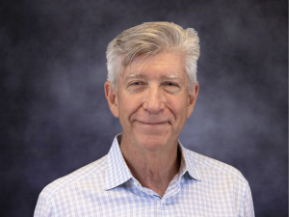
Michael Sweesy, PLA, CERP, is a Professional Landscape Architect, Certified Ecological Restoration Practitioner, and habitat restoration specialist with 42 years of experience in landscape architecture and habitat restoration. He brings expertise in wetland and upland habitat restoration, ecological site assessment, hydrology and soils, restoration design and construction, and long-term habitat management.