
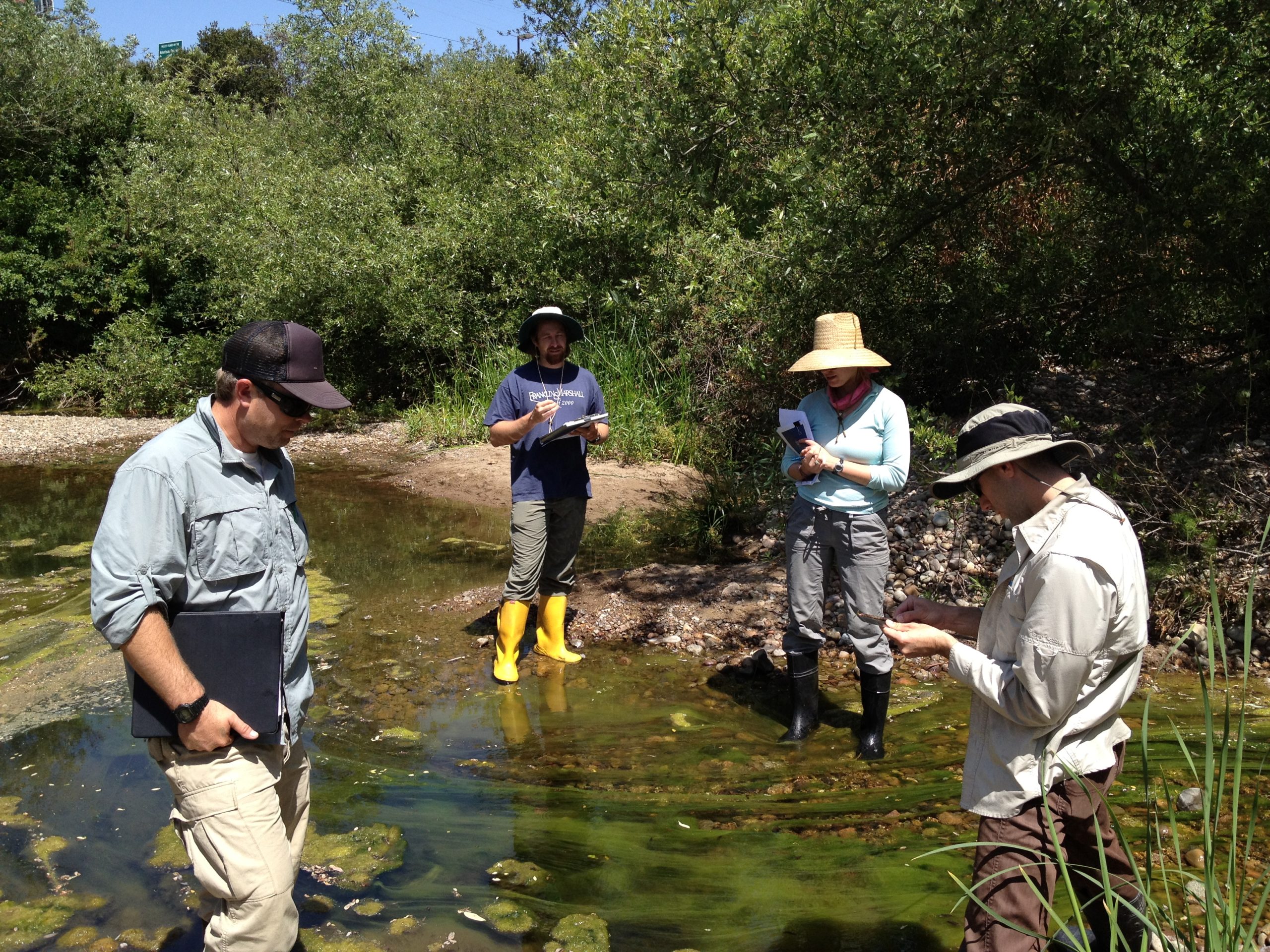
Water quality is a critical component of ecosystem health. Studying aquatic organisms is a useful indication of the overall health of aquatic ecosystems. One such group of organisms, benthic macroinvertebrates (BMIs), are considered excellent indicators of water quality and in-stream habitat conditions.
What are Benthic Macroinvertebrates?
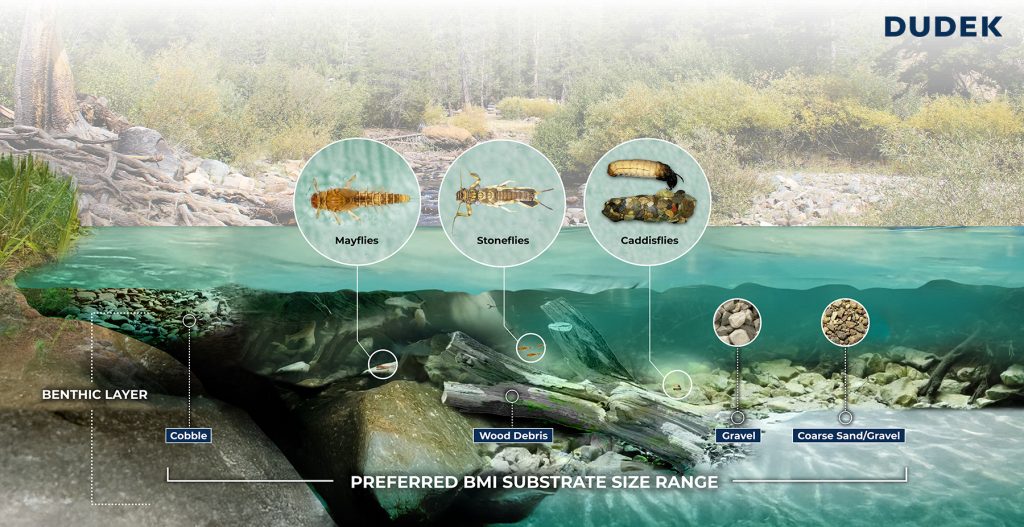
Benthic macroinvertebrates are organisms that live on, in, or near the bottom of water bodies like streams, rivers, and lakes. They include worms, crustaceans, and immature forms of aquatic insects such as stoneflies and mayfly nymphs.
BMIs are effective indicators of water quality because they respond quickly to changes in their surroundings. By studying the species composition of BMI communities in a water sample, biologists and water quality professionals can gain a snapshot of the water’s biological suitability at the time of sampling.
Why Are BMIs Great Indicators of Water Quality?
Benthic macroinvertebrates are great indicators of water quality due to their diverse ranges of pollution sensitivity. Dudek Watershed Scientist Chris Oesch said, “Some BMIs are predators, others feed on dead organic material, and some feed on plants or algae. Each species has its own tolerance levels for pollution, temperature changes, and substrate sedimentation.” Because of this, different species of BMIs will react to stressors in unique ways.
For example, a water sample with a high abundance of pollution-tolerant species (like certain types of worms or fly larvae) combined with a lack of more pollution-sensitive species (such as mayflies) may signal degraded water quality conditions. On the other hand, if a water body supports a wide diversity of pollution-sensitive species, it’s a positive sign of good water quality.
The Role of BMIs in Water Quality Assessments
BMIs are particularly valuable as biology-based criteria when there is a discrepancy between Total Maximum Daily Load (TMDL) levels and apparent biological conditions. TMDL is the maximum amount of a pollutant that a water body can receive while still meeting water quality standards. “However, just because a water body meets its TMDL thresholds doesn’t mean that its biological community is thriving,” Oesch said. Similarly, a water body that exceeds its TMDL limits might still support a healthy biological community.
In these cases, BMI data can fill in the data gaps. When TMDL levels don’t tell the full story, BMIs provide a more direct measure of the ecosystem’s biological health. They can help identify factors in water quality that might not be included in standard TMDL assessments, giving researchers a more comprehensive picture of water quality.
Evaluating Stream Restoration Projects
Benthic macroinvertebrates don’t just help us understand the current state of water quality; they can also be instrumental in assessing the effectiveness of stream restoration projects. Restoration efforts aim to improve both the physical habitat (like sediment distribution and water flow) and water quality.
For instance, the composition of organic matter, the presence of refuge structures, and the complexity of in-stream habitats all influence the health of BMI populations. By regularly monitoring BMIs, we can gauge whether restoration projects have the desired impact on both water quality and habitat suitability for aquatic organisms.
Dudek’s Expertise in BMI Monitoring
Dudek has extensive experience using BMI data for a wide range of applications, from federal fish habitat evaluations to monitoring rare snail populations. Our Watershed Sciences team is adept at modifying BMI protocols to fit specific needs, ensuring that the most accurate and relevant data is collected for each project.
“BMI data can be influenced by a variety of environmental factors, such as flow rates, water temperature, and predation pressures,” Oesch said. “These factors can affect the presence or absence of certain species, so understanding how these factors interact with BMI populations is key to interpreting results accurately.”
Dudek’s expertise in understanding and interpreting these variables helps ensure that BMI data is used effectively to support regulatory guidance, environmental assessments, and water quality improvement efforts.
Benthic macroinvertebrates are powerful allies in the quest to understand and protect our water resources. By using BMI data, biologists can assess the health of aquatic ecosystems, track changes over time, and detect unknown stressors that might otherwise go unnoticed. Whether evaluating water quality for regulatory compliance purposes or assessing the success of a stream restoration project, BMI monitoring is a versatile and valuable tool.
At Dudek, we’re committed to providing expert BMI assessments to help our clients make informed, data-driven decisions that support long-term ecological health and regulatory compliance. If you’re interested in learning more about how we support watershed health, reach out to us today!