
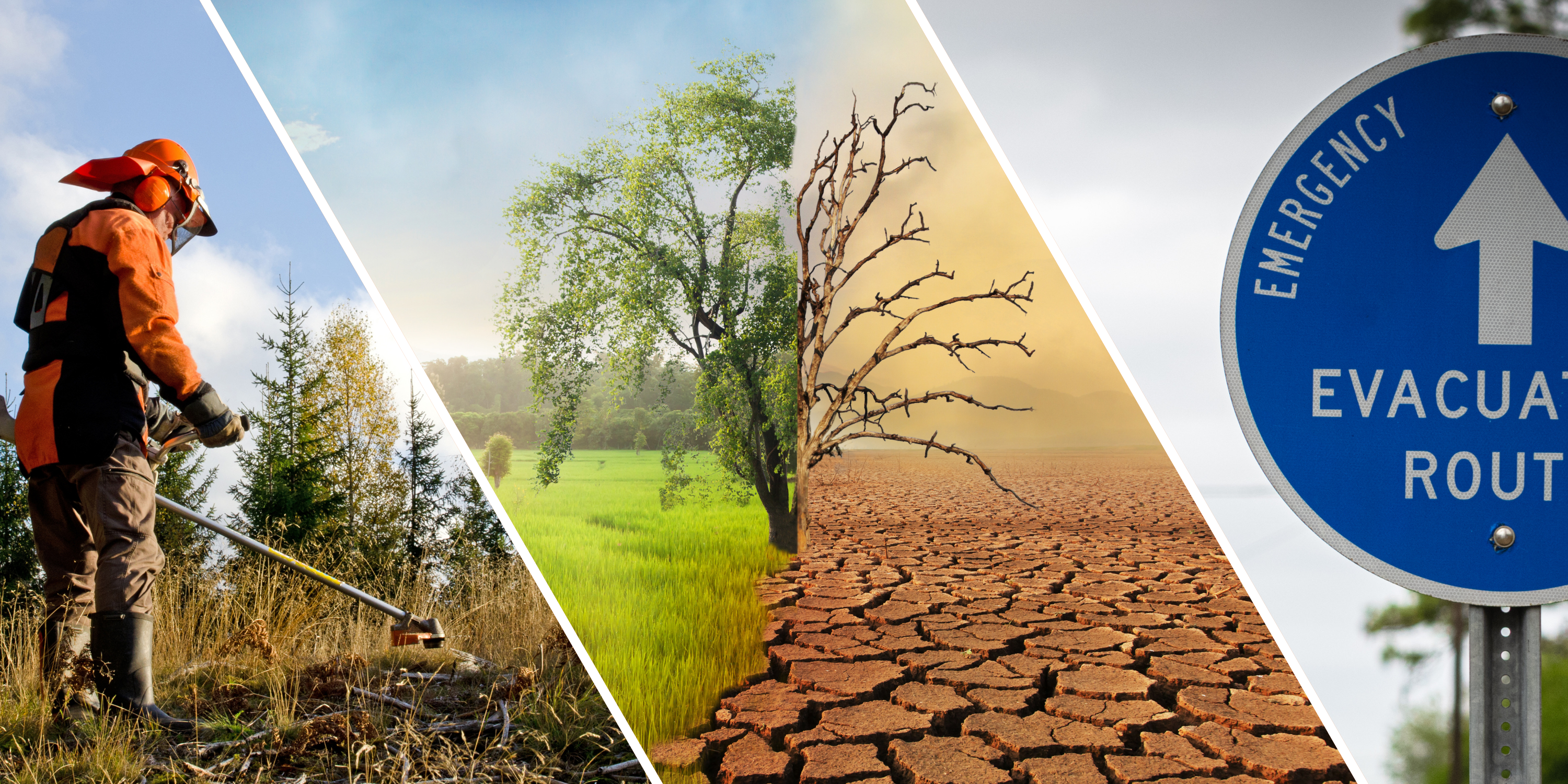
Periods of prolonged droughts coupled with low humidity and high winds have created conditions that are more conducive to wildfires. During these periods of extreme fire weather, otherwise controllable ignitions have a high probability of becoming wildfires. The increased frequency of these conditions and the expanded times of year they are occurring have resulted in more ignitions escaping initial control efforts and becoming large and damaging wildfires.
According to the Fifth National Climate Assessment, warmer and drier conditions, coupled with prolonged droughts, have stressed forest vegetation, leading to pest outbreaks and accumulated dead plant material, which increases the accumulation of surface fuel. This has resulted in numerous large, intense, and destructive wildfires in recent decades.
Increasing Resilience through Fire Protection Planning
Planning for community resilience requires assessing risks and vulnerabilities, measuring readiness and adaptive capacity, and developing strategic actions to strengthen the capacity to respond. Whether the goal is to establish a sustainable urban forest with sufficient canopy cover to cool communities and provide a buffer from wildfire or to focus efforts on hardening fire-vulnerable communities, effective urban forest management plans, community wildfire protection plans, and evacuation plans are critical as communities strive to build resilience in the face of a changing climate.
Dudek’s work on the Santa Barbara Community Wildfire Protection Plan Update and Program Environmental Impact Report is a prime example of how we are helping communities prepare. This project involved assessing risks and vulnerabilities, measuring readiness and adaptive capacity, and developing strategic actions to strengthen the capacity to respond to the negative impacts of climate change.

Human Influence and Urbanization on Wildfire Risk
While wildfires are a natural part of Earth’s cycle, human activities have exacerbated wildfire occurrence and severity. According to Dudek Fire Protection Planner Austin Ott, “California has been a fire-adapted ecosystem for thousands of years.” Frequent, yet low-severity fires were a natural occurrence and a necessary part of California’s fire ecology, keeping vegetation thinned throughout forests and shrublands. The native Californians were adapted to these wildfire occurrences and adjusted their lifestyle, including the location of their villages depending on wildfire.
As modern communities have expanded into wildland areas, we have protected those homes by extinguishing fires. “Unfortunately, this has led to a drastic build-up of vegetation that provides fuel for wildfires, increasing the severity of wildfires and leading to the recent influx of major wildfires,” Ott said. “In years with minimal rainfall, the dense vegetation becomes extremely dry and wildfires become especially severe, to the point that firefighting resources are unable to effectively mitigate and control them.”
Mitigating Wildfire Risk in the Wildland-Urban Interface
A significant portion of U.S. housing –39%– is located in the wildland-urban interface (WUI) where residential development meets natural areas such as forests, grasslands, and shrublands.
“California leads the nation with 5.1 million housing units situated in the WUI,” Ott said, citing a USDA report. “This convergence of human development and natural wildfire-prone areas has set the stage for potentially devastating wildfire impacts.” Particularly for buildings constructed prior to 2008, when restrictive and performance-based ignition resistant construction requirements were codified. There are numerous examples of recently constructed master planned communities in the WUI areas that were designed to mitigate fire risk being tested by fire and performing as planned.
The Gaviota Coast Community Wildfire Protection Plan addresses the challenges posed by rapid urbanization and the expansion of communities into wildfire-prone areas. This plan exemplifies Dudek’s efforts to help communities mitigate wildfire risks in urban-wildland interfaces by developing customized mitigation and fuel maintenance plans. The plans acknowledge that fire is a natural recurring component of California’s ecology and use scientifically backed methods to reduce the historically high level of fuels.
Recognizing the Risk and Taking Steps Toward Resilience
Wildfire events are a stark reminder of the urgent need to address community resilience so that our cities are prepared for the diverse threats they face, including rising temperatures and wildfires. The goal is to develop and implement measures that make our cities more livable, safe, and sustainable. By understanding the factors contributing to these events and implementing comprehensive, multi-faceted resilience and forest management strategies, we can mitigate the risks and minimize catastrophic events like those experienced by so many during the recent wildfires. Dudek remains committed to researching and understanding the threats faced by our communities and implementing measures to address those threats through planning, outreach, and hands-on approaches.
