

Across the United States, communities increasingly face critical water-related challenges, from prolonged droughts and groundwater depletion to water contamination and unequal access to clean water. These issues are intensified by climate change, which has led to more frequent and severe weather events and placed additional strain on already limited water resources.
Over the past several decades, public agencies, water districts, and regional leaders have tackled these problems through innovative projects that enhance water security, resilience, and equity. For over 45 years, Dudek has played a key role in helping clients develop sustainable, forward-thinking solutions that address these complex water challenges. From innovative water treatment design and conveyance system repair to strategic planning for sustainable water use, our multidisciplinary team delivers integrated services that address every phase of the water cycle.
Increasing Reliability with Local, Drought-Proof Water Supply
Drought negatively impacts various domains in society, including agriculture (less water for crops), water supplies (less water for people), energy production (less water to cool critical infrastructure), and more. The U.S. Drought Monitor grades broad-scale drought conditions from abnormally dry to exceptional drought. According to the EPA, at any given time between 2000-2023, roughly 10-70% percent of the U.S. land area was “at least abnormally dry.”
In response to prolonged drought conditions and overreliance on imported water, progressive projects like the Carlsbad Desalination Plant have emerged as vital components of long-term water supply strategies. As the largest seawater desalination plant in the United States, the Carlsbad Desalination Plant ensures a locally controlled, drought-proof, high-quality supply of water for about 400,000 people in San Diego County. Dudek prepared the Environmental Impact Report (EIR) for the project and helped secure approvals and permits from all of the major regulatory agencies. Dudek CEO Joe Monaco noted, “The Carlsbad Desalination Plant is a pioneer in large-scale seawater desalination in California and the United States. San Diego’s investment in desalination has helped transform the region from a drought‑constrained importer into a net contributor to water reliability across the Southwest. That’s the power of resilient infrastructure built with the future in mind.”
The Wall Street Journal highlights how long‑term investments in desalination have fundamentally reshaped San Diego’s water future. Once heavily dependent on imported Colorado River water, the region now produces enough locally generated supply to support neighboring states facing acute shortages. Central to that shift is the Carlsbad Desalination Plant, which produces approximately 18 billion gallons of drinking water annually, making it the largest ocean‑seawater desalination facility in North America and a cornerstone of San Diego’s water resilience strategy.
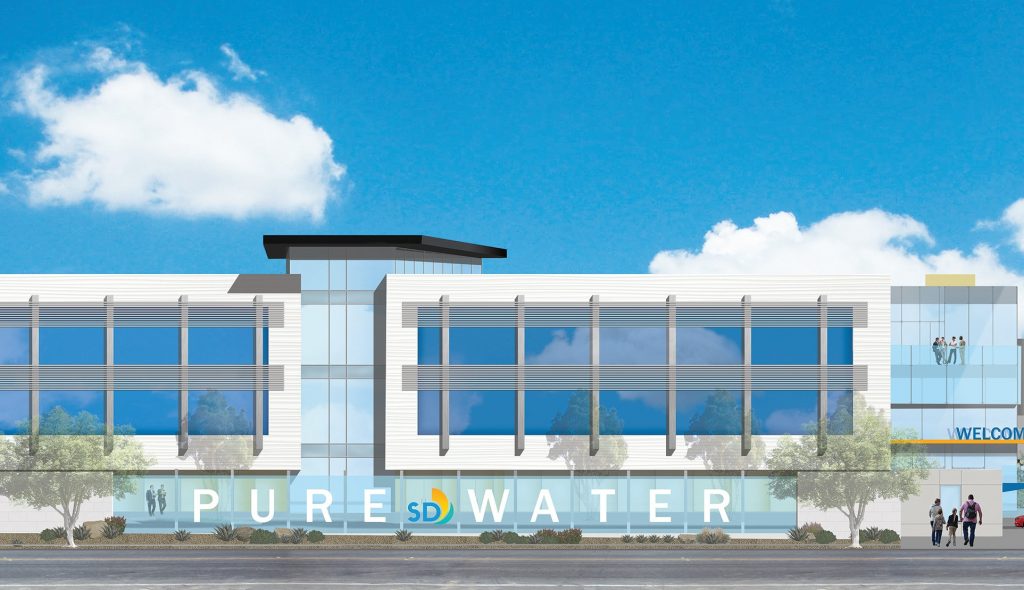
Similarly, the City of San Diego’s Pure Water San Diego Program has reshaped the way communities think about wastewater and local water reuse. Based on a vision for a transformative overhaul of the water supply system, Pure Water San Diego forges a resilient, locally sourced alternative to imported water and protects coastal waters by reducing the amount of treated wastewater that is released into the Pacific Ocean.
Dudek prepared the EIR/EIS evaluating the design and construction of new advanced water purification, pumping, and conveyance facilities, as well as upgrading existing facilities. Practice Director Shawn Shamlou, AICP, who managed the project, said, “The City’s Pure Water Program pioneered a new model for water recycling, creating a dependable supply that fortifies local resilience and contributes to water security across the region. Dudek’s CEQA, NEPA, and technical study solutions helped streamline the regulatory approval process while incorporating key input from local stakeholders.”
Delivering Water to Underserved Communities
Rural and disadvantaged communities are often disproportionately affected by poor water infrastructure and contamination. In California, more than 735,000 people are still served by water systems that fail to meet safe drinking water standards, with contaminants such as arsenic disproportionately impacting low-income, groundwater‑reliant communities.
These challenges are evident in the eastern Coachella Valley, where many residents rely on small or private well systems that can contain elevated arsenic levels and are prone to failure, leaving families without reliable water access.
Dudek is committed to supporting projects that provide safe, clean water to rural and/or disadvantaged communities. The Coachella Valley Water District Avenue 66 Transmission Main addresses this gap. Dudek engineers designed the 3-mile, 30-inch diameter pipeline to provide water supply redundancy to the community of Mecca and connect the Manuela Garcia Small Water System, which relies on wells currently contaminated with regulated substances like arsenic.
Due to the pipeline’s alignment through tribal and allotted lands, the project required close coordination on technical engineering issues with a wide range of stakeholders, including the Torres Martinez Desert Cahuilla Indians and the Bureau of Indian Affairs, to ensure their concerns were addressed. Project Manager Kate Palmer noted that “This project highlights our ability to listen, adapt, and take action.”
Promoting Sustainable Groundwater Management
According to the USGS, groundwater accounts for about 33% of the public water supply provided to American households and businesses by city and county water departments, and more than 98% of the drinking water provided to rural populations.

Protecting this resource is critical. Dudek has played a pioneering role in promoting the sustainable use of groundwater.
In response to the Sustainable Groundwater Management Act (SGMA), Dudek hydrogeologists, engineers, and regional planners have supported groundwater sustainability agencies statewide with compliance strategies, plan development, and implementation. We’ve worked with disadvantaged communities to assess and improve existing infrastructure and assisted public agencies with drought management through groundwater banking and remediation of contaminated water sources.
Dudek has been at the forefront of groundwater sustainability plan (GSP) development, having prepared 10 GSPs, three of which were in critically overdrafted basins, and all of which have been approved by the California Department of Water Resources (DWR). We were among the first in California to assist with GSP preparation, leading GSP development for the Fox Canyon Groundwater Management Agency in Ventura, as well as for the County of San Diego and the Borrego Valley Water District. These plans ensure the long-term viability of groundwater basins, safeguarding water supplies for future generations.
Principal Hydrogeologist Jill Weinberger, PhD said, “Just 10 years ago, California faced a potential future without reliable groundwater. The GSPs Dudek developed have rewritten this future in communities throughout the state, helping to ensure the availability of this vital resource for generations to come.” Jill continued, saying, “I am proud to continue our work implementing SGMA with all who share a goal of leaving our communities better than we found them.”
“Just 10 years ago, California faced a potential future without reliable groundwater. The GSPs Dudek developed have rewritten this future in communities throughout the state, helping to ensure the availability of this vital resource for generations to come.”
Jill Weinberger, Phd, Principal Hydrogeologist
Advancing Water Equity and Integrated Planning
Many successful water and watershed projects center water equity as a core objective in both planning for and implementing projects. Water equity entails ensuring all communities have access to safe, clean, affordable drinking water and have a role in deciding how water is managed in their communities, among other factors. In California, this includes supporting water resources planning and project efforts that take a watershed-wide approach, balancing ecological health, Tribal and community needs, and climate resilience.
Dudek has collaborated within and between regions with watershed groups, joint powers authorities, community-based organizations, and community-based public-private partnerships to improve water, climate, and ecosystem resilience through integrated, multi-benefit projects.
Regional Water Planner Jane Gray said, “For the past 20 years, Dudek has been on the leading edge of outreach, engagement, project scoping, funding, and implementing water supply and water quality solutions for communities throughout California, including underserved/underrepresented communities and California Tribes.”
Water scarcity poses a particular threat to indigenous populations due to their reliance on land and water supplies, such as medicinal and culturally important plants and water sources. The Underrepresented Communities, California Tribes, and Small Farmers Groundwater Technical Assistance Program (URCTA) (developed by the California Department of Water Resources) exemplifies Dudek’s commitment to helping clients improve water equity and sustainability.

This program entails multilingual outreach and education, statewide mapping, and direct technical assistance to underrepresented communities, Tribes, and small farmers in basins regulated by SGMA. The project supports building capacity by developing water supply projects and addressing water resilience challenges, and it provides direct hydrogeological, engineering, and other expertise to program recipients.
Sustaining Watersheds Through Long-Term Stewardship
Healthy watersheds are vital. In addition to providing enjoyable recreation opportunities for people, healthy watersheds reduce flood mitigation costs have been found to decrease costs associated with drinking water treatment and conveyance. A study cited by the EPA “found it significantly more cost-effective to protect the watershed’s natural land cover and forests to provide natural filtration, rather than installing a multi-billion-dollar water treatment facility.”
Dudek has supported the City of San Diego for decades on projects related to watershed health and source water protection. This enduring partnership has enabled a suite of integrated services that reflect Dudek’s multidisciplinary expertise and long-term commitment to water resource sustainability. Under successive on-call contracts, the Dudek team supported watershed health and resilience by developing a resource management plan that harmonized hydrography with ecological priorities and by creating a restoration plan for Santa Ysabel Creek that improved riparian function and habitat resilience.
Extensive technical analyses complemented these efforts, including:
- A carbon sequestration analysis across 40,000 acres of source water protection lands, quantifying climate co-benefits of conservation
- An agricultural analysis in the San Pasqual Valley to evaluate farming practices based on their water quality impacts and overall environmental footprint, guiding more sustainable land use within the city’s agricultural preserve.
- An assessment of the water uptake of eucalyptus trees along the Lower Otay Reservoir shoreline, informing vegetation management strategies to optimize water availability.
Principal Restoration Ecologist Michael Sweesy, PLA, CERP who managed the on-call contracts, said, “These projects reflect more than just technical expertise—they represent decades of trust and collaboration. Our on-call contracts have allowed us to respond adaptively to evolving watershed challenges, and that continuity has been key to protecting regional water resources in a meaningful, lasting way.”
Together, these projects exemplify Dudek’s enduring role in safeguarding regional water resources through science-driven, adaptive management.
“These projects reflect more than just technical expertise—they represent decades of trust and collaboration. Our on-call contracts have allowed us to respond adaptively to evolving watershed challenges, and that continuity has been key to protecting regional water resources in a meaningful, lasting way.”
Michael Sweesy, Principal Restoration Ecologist
Looking Ahead
Global water demand is projected to increase by 20% by 2050, and many countries will face reduced surface water supplies in that same time frame. As water challenges continue to evolve, so must the solutions. From large-scale infrastructure to community-led planning, the path forward depends on collaboration, innovation, and an unwavering focus on resilience and equity. With nearly 50 years of experience addressing complex water issues, Dudek remains committed to supporting clients as they implement the next generation of water solutions.

About the Experts
- Joseph Monaco, AICP, is President and CEO of Dudek. He brings more than 35 years of leadership in public and private sector planning and environmental regulatory compliance. Joe’s experience includes managing complex environmental documentation and permitting for major infrastructure and development projects.
- Shawn Shamlou, AICP, is a principal environmental planner with 30 years of experience guiding complex infrastructure and development projects through CEQA and NEPA review. With deep expertise in environmental permitting and agency coordination, he helps public and private clients navigate regulatory challenges and deliver purpose-driven, compliant projects.
- Kate Palmer, PE, is a seasoned water systems engineer with more than 20 years of experience designing resilient infrastructure for water, wastewater, and recycled water. Known for her expertise in large-diameter conveyance system design, Kate delivers innovative, sustainable solutions, even in the most environmentally sensitive settings.
- Jill Weinberger, PhD, is a principal hydrogeologist with more than 25 years of experience in groundwater supply and development, water resource management, and groundwater contamination. She leads water resource investigations across California and helps agencies meet SGMA requirements with science-driven solutions.
- Jane Gray is a regional planner and environmental specialist with more than 25 years of experience managing complex water, land use, and policy planning projects. She brings a collaborative, solutions-focused approach to navigating regulatory processes and delivering results across public, private, and nonprofit sectors.
- Michael Sweesy, PLA, CERP, is a landscape architect and ecological restoration expert with more than 40 years of experience designing restoration projects for wetlands, uplands, and urban canyon ecosystems. Michael blends ecological insight with regulatory expertise to create resilient, water-wise environments.